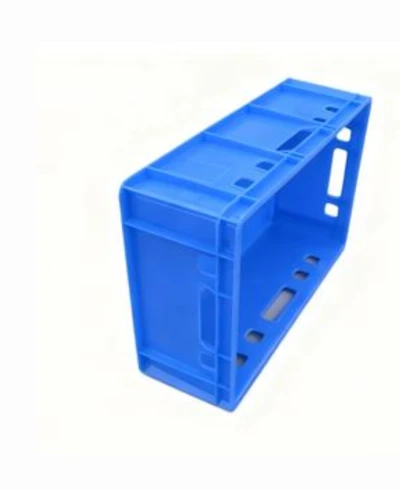
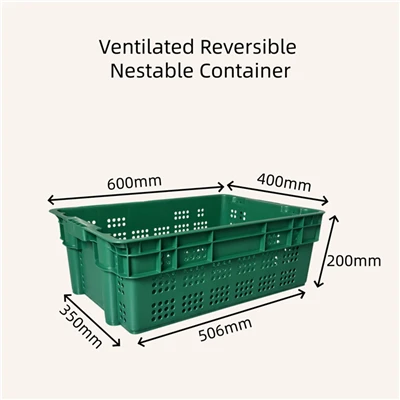
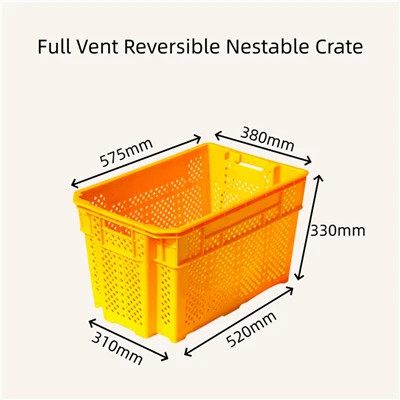
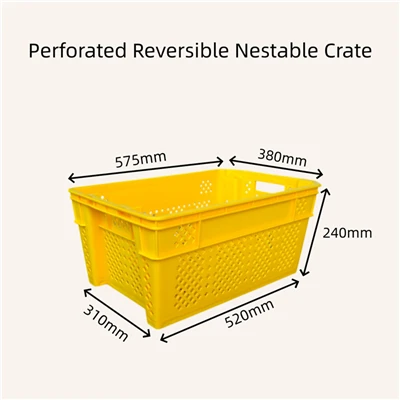
Driven by local agricultural patterns, logistics infrastructure, procurement budgets and regulatory requirements, regional preferences for plastic shipping crates vary significantly across global markets. No single product model can satisfy buyers from all geographic regions. Exporters should select appropriate crate configurations according to target-market application scenarios to align with real-world end-user demands.
Europe and North America
Buyers prioritize EU-standard dimensional specifications, with strong preference for foldable crates and reversible nestable crates. Great importance is placed on space-saving performance for empty-unit return shipments. These containers are required to work compatibly with automated production lines, conveyor belts and high-bay warehouse racking systems.
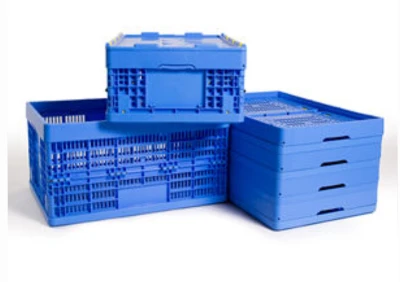
Key buyer evaluation criteria: monomaterial construction, service-friendly repairable structure, pre-mounted RFID tag positions, percentage of post-consumer recycled (PCR) plastic content and food-contact compliance certification. Strict requirements apply to unit weight, stacking stability and UV-resistant anti-aging performance. Simple lightweight perforated fruit crates account for a small market share. Closed-loop container rental models are widely adopted in local supply chains.
India and South Asia
Non-collapsible fully perforated fruit crates represent the mainstream product type. Foldable designs are rarely specified. Buyers value low acquisition cost and maximum ventilation. These crates are deployed for field-harvest operations and short-distance distribution within wholesale produce markets. Units go through high-frequency circulation cycles, while service-life expectations are relatively moderate.
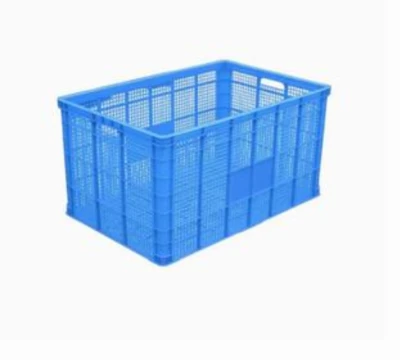
End-users are mainly small-scale farmers and wholesale market operators; automation penetration remains low. Purchase price stands as the primary decision factor. Crates made from recycled plastic are widely accepted, with loose requirements for recycled-content ratios and compliance certifications. Foldable and nestable crates gain limited market traction in this region.
Southeast Asia (Vietnam, Thailand, Malaysia)
Two distinct demand segments co-exist in this market. Local agricultural producers order cost-effective non-collapsible perforated crates for fruit and vegetable handling. Foreign-owned manufacturing and export-processing facilities source EU-spec nestable and foldable crates to integrate with cross-border supply chains. Given the local hot-humid climate, UV-stabilized weather-resistant performance serves as a major competitive advantage.
Middle East and Africa
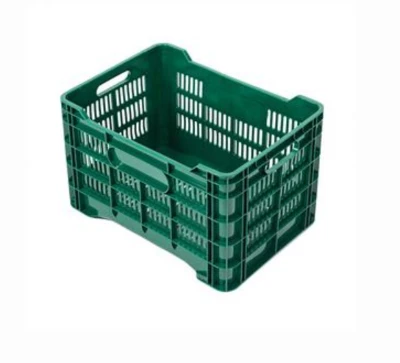
Cost sensitivity sits at a high level across most markets. Heavy-duty non-collapsible ventilated crates are the dominant choice. Most containers are stored outdoors under direct sunlight, so dark-colored variants with enhanced UV resistance are preferred. Foldable and nestable crates are mostly purchased by importers based in major cities. Traditional stacking-only crates still prevail in broad agricultural areas.