Meeting the Evolving Needs of the Fresh Produce Supply Chain
Fresh fruits and vegetables go through multiple stages before reaching end destinations: harvesting, sorting, temporary storage, wholesale distribution, supermarket replenishment and transportation. At every stage, businesses need to manage product handling, packaging expenditure, storage capacity and delivery efficiency.
Within the global fresh food sector, reducing produce wastage, improving resource utilisation and controlling supply chain costs remain key operational priorities. Proper packaging, careful handling and suitable storage conditions collectively preserve produce quality throughout distribution.
Under this industry backdrop, the Foldable Mesh Vegetable Fruit Basket delivers a reusable handling solution for enterprises requiring practical containers for fresh produce transit and temporary storage.
Its mesh structure enables air circulation around loaded produce, while the basket design keeps goods organised during handling and distribution. Thanks to the folding mechanism, the container can be collapsed after use to minimise space occupation for empty basket storage and return shipment.
For agricultural cooperatives, produce wholesalers, supermarket distribution networks and packaging distributors, these advantages are critical when businesses evaluate reusable packaging solutions for daily operations.
1)Wholesale Fruit and Vegetable Markets
Wholesale markets process large volumes of fresh produce daily. Goods are commonly sorted into individual containers prior to transfer to retailers, distributors or transport vehicles.
Foldable mesh vegetable fruit baskets allow businesses to categorize goods by product type, batch or delivery destination. When properly loaded and deployed, their ventilated mesh structure maintains air circulation surrounding the fresh produce.
For wholesalers and market operators, standardised container dimensions streamline stacking, internal transit and inventory management. With a proper collection, sanitisation and reuse workflow, reusable containers help cut dependency on single-use packaging.
Buyers need to assess not only upfront purchase cost, but also container service lifespan, sanitisation needs, replacement cycles, handling efficiency and return shipment expenses for empty baskets.
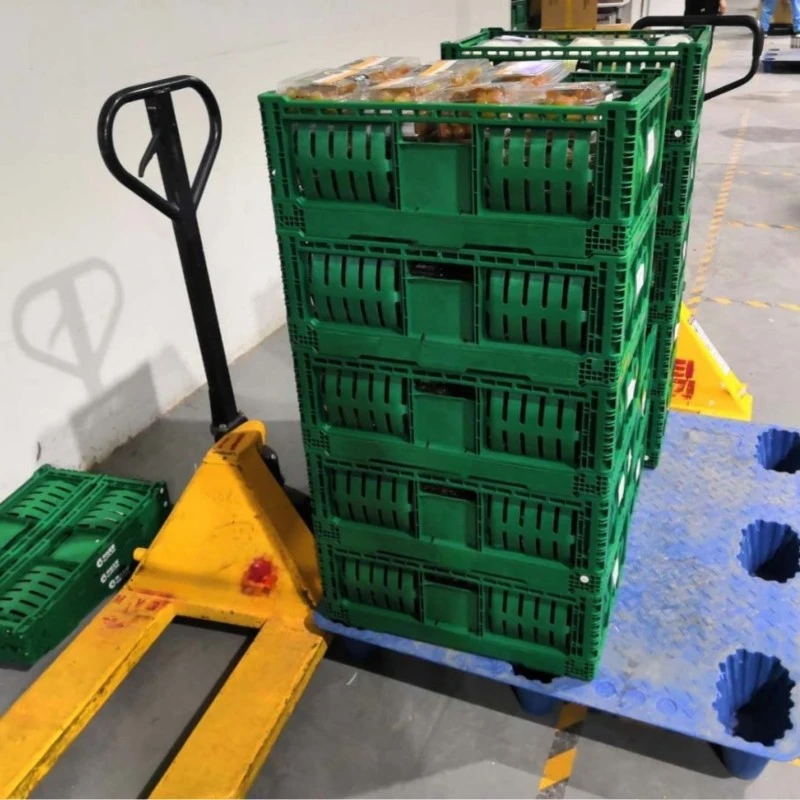
2)Supermarket Produce Display and Retail Replenishment
Supermarkets and fresh food retailers require streamlined workflows for receiving, storage and produce restocking. Reusable mesh baskets can be integrated into back-of-house storage, stock movement and selected fresh produce display workflows, subject to the container's design and surface finish. For instance, fruits and vegetables may be sorted into individual baskets upon goods receipt and transported to display zones as needed. Standardised containers help build consistent operational processes between receiving bays, stockrooms and retail sales floors. For supermarket chains and retail distribution firms, compatibility with existing shelving, trolleys, storage racks and material handling routines represents a key consideration. Enterprises must also verify that the chosen material and sanitisation protocols comply with their food-contact and hygiene standards.
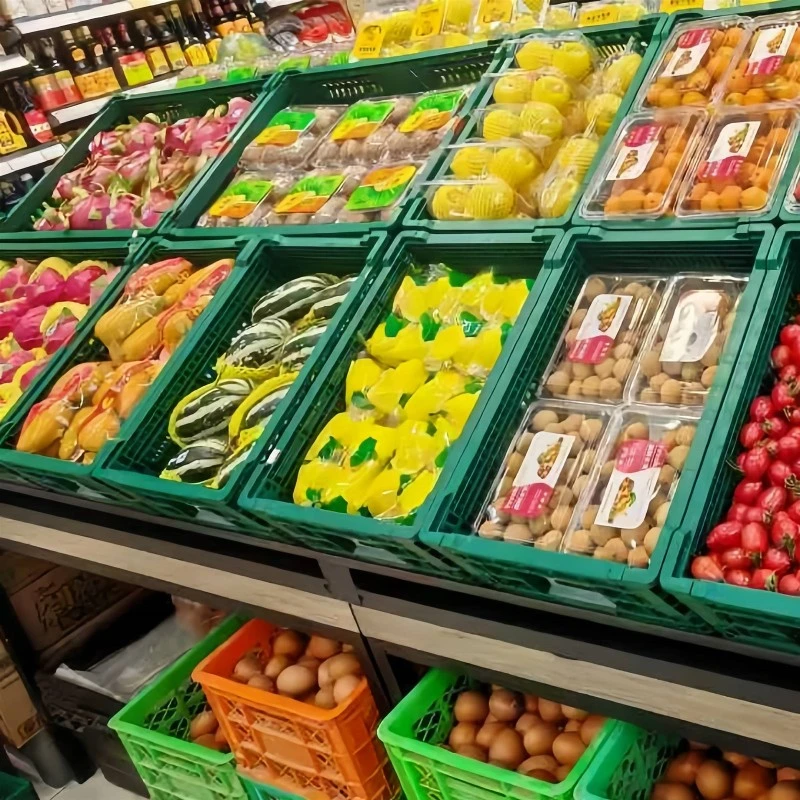
3)Fruit Distribution, Including Durian and Other High-Volume Produce
Fruit distribution creates varied packaging challenges determined by product weight, form, surface properties and transit distance. Within real-world distribution settings, durians and other bulky fruits can be placed inside reusable crates for collection, sorting, temporary storage and onward transit. Proper container dimensions and loading layout are critical to prevent excessive compression and avoid unnecessary produce damage. For long-distance distribution, buyers must evaluate stacking stability, vehicle loading configurations and specifications of downstream warehouses and receiving facilities. The reusable mesh fruit basket can serve as a component within a wider transport packaging system, enabling enterprises to standardise material handling across all distribution stages.
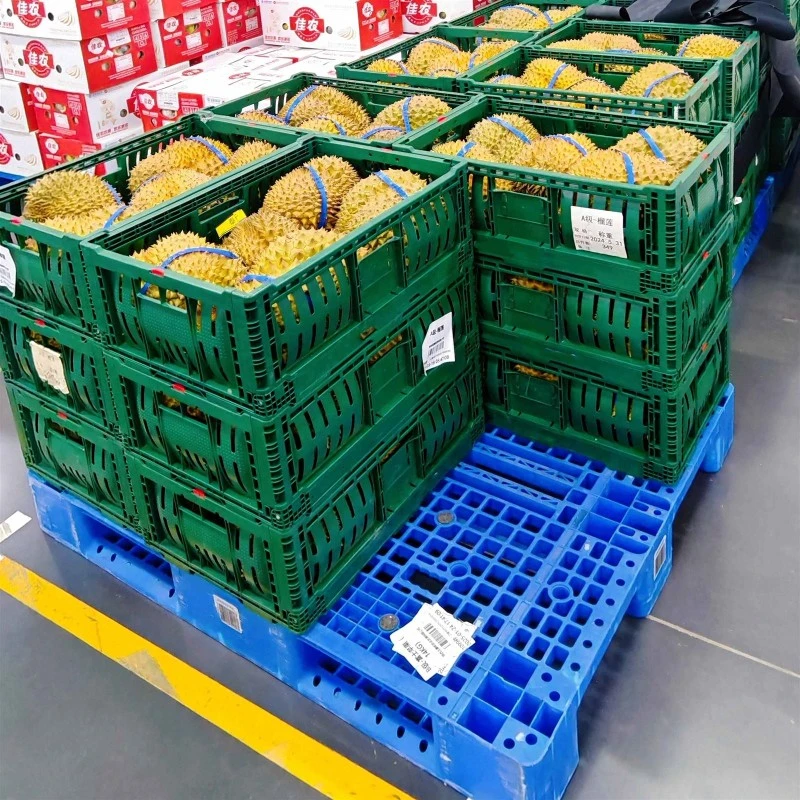
4)Supporting More Efficient Fresh Food Supply Chains
The global fresh food sector keeps focusing on produce protection, resource utilisation and logistics cost control. Packaging forms one component of this wider operational challenge.
For enterprises evaluating reusable produce containers, key practical priorities include:
Produce protection: Select suitable dimensions and loading layouts for the handled fresh produce.
Operational efficiency: Assess stacking performance, material handling, sanitisation and compatibility with existing equipment.
Space utilisation: Compare fully loaded and collapsed dimensions for folding-style containers.
Lifecycle cost: Evaluate upfront purchase expenditure, maintenance, loss ratios, return transit and anticipated reuse cycles.
Hygiene management: Set up proper sanitisation, inspection and replacement protocols.
Supply chain compatibility: Verify that containers comply with specifications from suppliers, warehouses, transport providers and receiving clients.
Joint assessment of these factors enables enterprises to identify whether the foldable mesh vegetable fruit basket matches their unique distribution model.
✨Final Remarks
From agricultural harvesting and wholesale produce markets to supermarket restocking, fruit distribution and warehouse pallet operations, the Foldable Mesh Vegetable Fruit Basket can fulfil multiple roles within the fresh food supply chain.
Its practical value relies on the container's design, load capacity, durability and compatibility with the operational environment. Where collapse functionality and an effective return framework are in place, the basket can also help enterprises manage storage and transit of empty baskets with greater efficiency.
As fresh food enterprises keep assessing reusable packaging and refining logistics workflows, selecting the correct produce container remains a key element for constructing a better-organised, cost-efficient supply chain.